
Generally, manual transmissions do not have torque converters; they rely on a direct mechanical connection. However, exploring the possibilities reveals interesting challenges and modern alternatives.
The Core Question: Compatibility?
The fundamental question of compatibility – can a torque converter function effectively with a manual transmission – is complex. Traditionally, these systems are mutually exclusive due to their differing operational principles. Manual transmissions prioritize a direct, mechanical link between the engine and wheels, offering precise control. Introducing a torque converter, a fluid coupling, disrupts this directness.
The core issue lies in the torque converter’s inherent slip, even when locked. This slip is undesirable in a manual system designed for immediate power transfer. Furthermore, the constant turning of the torque converter’s input shaft presents significant challenges for gear selection without a disengagement mechanism like a clutch. Essentially, attempting to combine these technologies requires overcoming substantial engineering hurdles to maintain functionality and driver experience.
Brief Overview of Manual Transmission Operation
Manual transmissions operate through a direct mechanical connection, utilizing gears of varying ratios to adjust engine output for speed and torque. The driver controls gear selection via a shift lever, engaging different gearsets within the transmission. A clutch pedal disengages the engine from the transmission, allowing for smooth gear changes.
When the clutch is engaged, power flows directly from the engine’s flywheel, through the transmission’s input shaft, and ultimately to the wheels. This direct link provides a responsive and connected driving feel. Synchronizers play a crucial role, matching the speeds of the gears before engagement, preventing grinding and ensuring smooth shifts. The efficiency of this system relies on this precise mechanical interaction.
Brief Overview of Torque Converter Operation
Torque converters are fluid coupling devices found in automatic transmissions, transmitting engine power to the transmission without a direct mechanical link. They utilize fluid dynamics – typically Automatic Transmission Fluid (ATF) – to transfer rotational force. A torque converter consists of three main components: the impeller (pump), turbine, and stator.
The impeller, driven by the engine, spins and pumps fluid towards the turbine, causing it to rotate and drive the transmission. The stator redirects fluid flow, increasing torque multiplication, especially at lower speeds. This “slip” allows the engine to continue running even when the vehicle is stopped. Unlike a direct connection, a torque converter inherently introduces some energy loss due to fluid friction.
Why Manual Transmissions Typically Don’t Use Torque Converters
Manual transmissions prioritize a direct power transfer, which is compromised by the inherent slip within a torque converter’s fluid coupling system.
The Role of the Clutch in Manual Systems
The clutch is fundamental to manual transmission operation, serving as a direct link between the engine and gearbox, allowing for controlled disengagement and re-engagement of power. This disconnection is crucial for smooth gear changes, preventing grinding and enabling the driver to select the desired ratio. Without a clutch, attempting to shift gears while the engine is running would result in a constant battle against the rotating input shaft of the transmission.
Essentially, the clutch provides the necessary break in the power flow, a function a torque converter inherently lacks without a lockup mechanism. It’s this precise control over connection and disconnection that defines the manual driving experience and allows for efficient power delivery.
Synchronizers and Their Dependence on a Disconnected Input Shaft
Synchronizers are vital components in manual transmissions, responsible for matching the speeds of the gears before engagement. They achieve this by briefly frictionally locking the selected gear to the input shaft, bringing it up to speed. This process requires a temporarily disconnected input shaft – precisely what the clutch provides.
Introducing a constantly spinning input shaft, as a torque converter would deliver, fundamentally undermines the synchronizer’s function. They’d be forced to fight against the fluid coupling, attempting to accelerate a continuously turning mass, leading to excessive wear and inefficient shifting. The synchronizers simply aren’t designed to overcome such resistance.
The Strain on Synchronizers Without a Clutch
Without a clutch to disconnect the engine from the transmission, synchronizers would face immense and constant strain. Every gear selection attempt would involve battling the torque converter’s output, a spinning mass driven by engine power. This continuous friction would rapidly degrade the synchronizer components, leading to grinding, difficulty shifting, and ultimately, transmission failure.
Imagine attempting to mesh gears while one is already spinning at a different speed – the resulting clash is precisely what a clutch prevents. A torque converter eliminates that crucial disengagement, forcing the synchronizers to work against a perpetually turning input shaft, making smooth and reliable shifting impossible.
The Challenges of Integrating a Torque Converter with a Manual Transmission
Integrating a torque converter presents significant hurdles, primarily battling the constantly turning input shaft and necessitating a lockup mechanism for efficiency and control.
Fighting Against a Turning Input Shaft
A core issue arises from the torque converter’s inherent operation: it continuously spins its output, meaning the manual transmission’s input shaft wouldn’t be disconnected during gear selection. This creates a direct conflict with the fundamental principles of a manual system.
Normally, a manual transmission relies on disengaging the clutch to momentarily disconnect the engine from the transmission, allowing for smooth, clash-free gear changes. Without this disconnection, attempting to select a gear would involve forcing synchronizers to immediately match the speed of a constantly rotating input shaft – a task they aren’t designed for.
Essentially, you’d be fighting against the fluid dynamics of the converter itself, attempting to abruptly halt or accelerate its output. This would place immense stress on the synchronizers, leading to rapid wear and potential failure. Even simply starting the vehicle would present a challenge, as selecting any gear with a running engine would immediately engage a spinning input.
The Necessity of Torque Converter Lockup
Even if the input shaft issue were addressed, a functional system would still require a torque converter lockup mechanism for practical use. Without lockup, the inherent slip within the torque converter would severely impact fuel efficiency, particularly during highway cruising. Constant slippage translates directly into wasted energy and reduced mileage.
Lockup creates a direct mechanical connection between the engine and transmission, eliminating the slip and allowing for efficient power transfer. Historically, systems like the Case-o-Matic utilized hydraulic clutches for both converter disengagement during shifting and lockup when maximum power was needed.
Without this ability to “lock” the converter, the engine would constantly operate at a slightly higher RPM than the transmission input, negating many of the efficiency benefits of a manual gearbox.
Historical Examples: Case-o-Matic Transmissions
Case’s 30 series tractors, featuring “Case-o-Matic” transmissions in the 1950s, represent an early attempt to integrate a torque converter with a manually-shifted gearbox. However, these weren’t truly “manuals” in the modern sense; they were more of a power-shift system requiring careful operation.
Crucially, even Case recognized the limitations of a torque converter without clutch intervention. Their design incorporated two hydraulic clutches: one to disengage the converter for smoother gear changes, and another specifically for converter lockup. This lockup was essential to deliver full engine power to the wheels without the efficiency-robbing slip inherent in a fluid coupling.
The Case-o-Matic demonstrates that simply adding a torque converter to a manual transmission isn’t sufficient; sophisticated control mechanisms are vital.
Torque Converter Benefits and How They Contrast with Manual Feel
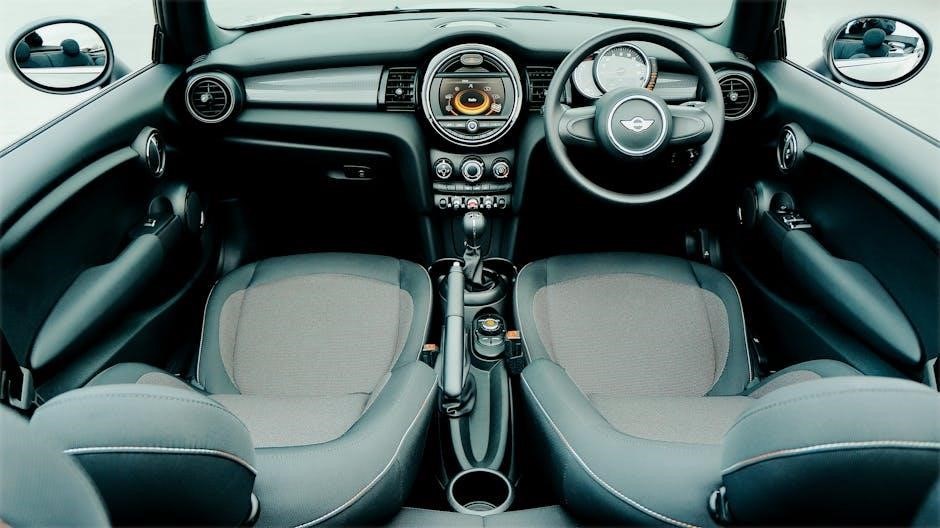
Torque converters offer significantly smoother transitions and gentle power delivery, contrasting with the more direct, and sometimes abrupt, feel of a traditional manual transmission system.
Smoothness and Gentle Transitions
The primary benefit a torque converter brings is unparalleled smoothness. Imagine a bathtub situated on a seesaw – filling it with automatic transmission fluid (ATF) demonstrates the principle. As the seesaw tips, the fluid doesn’t react instantly; it lags, absorbing and smoothing the motion.
This “latency” translates directly to gear changes in a vehicle. A torque converter doesn’t create an immediate, rigid connection like a manual clutch. Instead, it uses fluid dynamics to gently transfer power, eliminating the jerks and abruptness often associated with manual shifting. This inherent smoothness is a key reason why torque converter automatics are favored for comfortable daily driving, providing a more relaxed experience for both driver and passengers.
The “Bathtub on a Seesaw” Analogy
The bathtub-on-a-seesaw analogy vividly illustrates how a torque converter operates. Picture a seesaw, and place a half-filled bathtub in its center, using automatic transmission fluid (ATF). When the seesaw tilts, the fluid within the tub doesn’t immediately follow; it sloshes and lags behind the motion.
This delay is crucial. It represents the torque converter’s ability to absorb and dampen shocks. Instead of an instantaneous transfer of force, the fluid mediates the power delivery, creating a smoother, more gradual transition. This inherent cushioning effect prevents the harshness of a direct mechanical connection, offering a gentler driving experience. The analogy highlights the fundamental difference between a fluid coupling and a solid clutch.
Torque Multiplication and Initial Acceleration
Torque converters excel at multiplying torque, particularly during initial acceleration. This is a significant advantage over manual transmissions, which rely solely on engine power and gearing. The fluid coupling within the converter allows the engine to spin at its optimal torque-producing RPM while the transmission output adjusts to the vehicle’s needs.

Essentially, the converter acts as a variable-ratio gearbox, boosting low-end power. While a manual transmission delivers a direct, fixed ratio, the torque converter dynamically adjusts, providing enhanced pulling power from a standstill. This characteristic is especially beneficial for heavier vehicles or situations requiring substantial initial force, like towing or climbing hills.
Torque Converter Lockup and Performance Implications
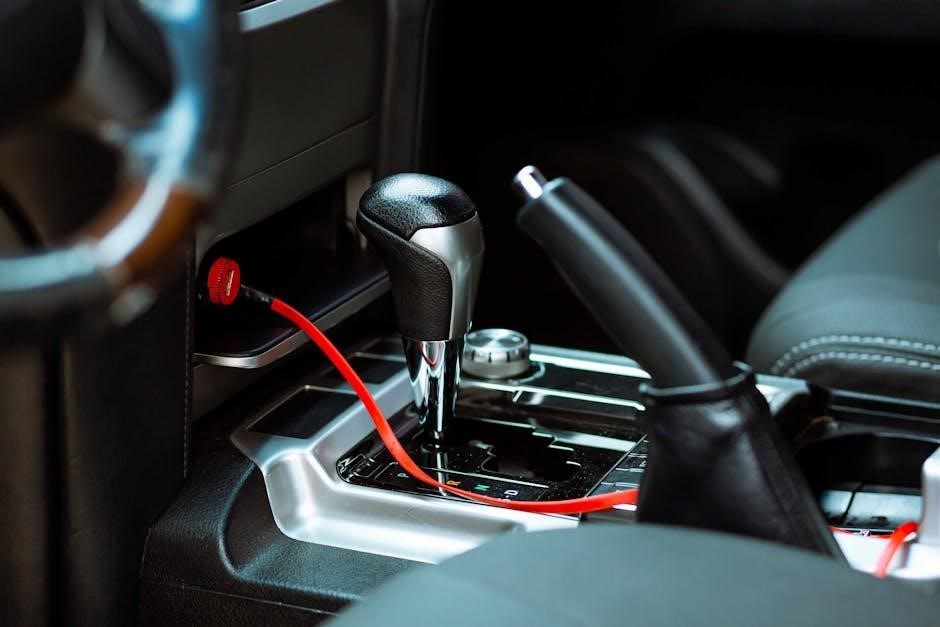
Lockup eliminates slippage, improving efficiency and responsiveness. It’s crucial for highway cruising and allows for direct power transfer, mimicking a manual’s feel.
Lockup for Highway Cruising and Fuel Efficiency
Torque converter lockup fundamentally alters highway driving dynamics. Without lockup, the torque converter perpetually slips, wasting energy and generating heat. This constant slippage reduces fuel efficiency significantly, as engine power isn’t fully transferred to the wheels.
Engaging lockup creates a direct mechanical connection between the engine and transmission, eliminating this parasitic loss. This results in improved MPG and a more responsive feel at cruising speeds; Essentially, it transforms the drivetrain’s behavior, making it behave more like a traditional manual transmission where power delivery is direct and efficient. Case-o-Matic transmissions, despite utilizing converters, understood this need, incorporating hydraulic lockup for optimal performance.
Modulating Power with a Locked Converter (Autocross Example)
In an autocross scenario, a locked torque converter offers unique control. Imagine braking into a corner – with the converter locked, you can subtly modulate power to the rear wheels, influencing the car’s balance and line. This is akin to left-foot braking in a manual, allowing for precise adjustments mid-corner.
The locked converter provides a direct link, translating throttle inputs into immediate changes in wheel speed. This responsiveness is crucial for maintaining momentum and maximizing grip. However, it demands finesse; unlike a slipping converter, there’s less inherent smoothing, requiring the driver to be more deliberate with their inputs. It’s a trade-off between smoothness and ultimate control, favoring precision.
The Impact of Lockup on Engine Braking
With a torque converter locked, engine braking becomes significantly more pronounced, mirroring the experience of a manual transmission in the same gear. This is because the engine is directly connected to the drivetrain, allowing deceleration to occur through engine resistance rather than being absorbed by fluid coupling.
However, the degree of engine braking can be subtly different. A manual offers a completely disconnected input shaft when the clutch is disengaged, eliminating engine braking entirely. A locked converter still presents some drag due to internal components. This can be advantageous for controlled deceleration, but requires awareness to avoid unsettling the vehicle, especially in slippery conditions.
Dual Clutch Transmissions (DCTs): A Modern Solution
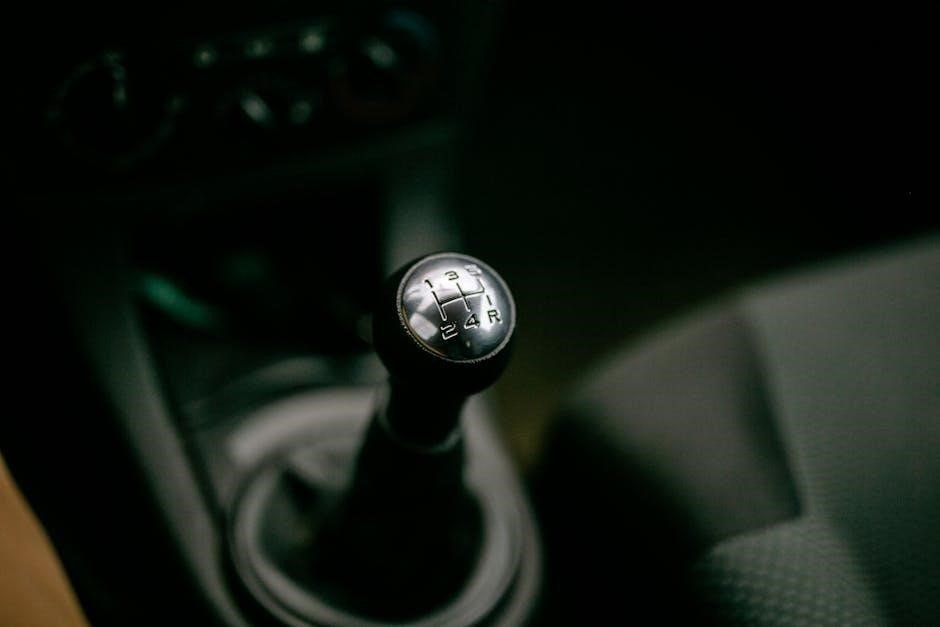
DCTs automate clutch control, offering rapid shifts without torque interruption, bridging the gap between traditional manual transmissions and conventional torque converter automatics.
Automating Clutch Control
The core innovation of Dual Clutch Transmissions (DCTs) lies in their ability to automate the clutch operation, a traditionally driver-controlled element in manual systems. This automation isn’t simply about replacing a pedal with an actuator; it’s a sophisticated system employing two separate clutches. One clutch manages odd-numbered gears, while the other handles even-numbered gears.
As one gear is engaged, the next anticipated gear is pre-selected on the other clutch. This pre-selection allows for incredibly fast and seamless gear changes, as the transition involves simply disengaging one clutch and engaging the other. This eliminates the torque interruption inherent in traditional manual shifts and provides a driving experience closer to an automatic, but with the efficiency and control associated with a manual gearbox. Developing a consistently reliable and comfortable automated clutch mechanism was, until recently, a significant engineering hurdle.
DCTs as a Bridge Between Manual and Automatic
Dual Clutch Transmissions (DCTs) effectively bridge the gap between the direct control of a manual transmission and the convenience of a traditional automatic. Unlike torque converter automatics, DCTs maintain a direct mechanical connection between the engine and the wheels for much of the time, offering the efficiency and responsiveness favored by manual enthusiasts.
However, they eliminate the need for the driver to manually operate the clutch and shift gears, providing a smoother, more accessible driving experience. This is achieved through the automated clutch system and pre-selection of gears. DCTs offer both fully automatic modes and the ability for the driver to manually control gear changes via paddle shifters or the gear lever, providing versatility. They represent a significant advancement in transmission technology, blending the best aspects of both worlds.
How DCTs Differ from Traditional Torque Converter Automatics
Traditional torque converter automatics rely on fluid coupling, inherently introducing slip and reducing efficiency. This contrasts sharply with DCTs, which utilize dual clutches for rapid, direct gear changes, minimizing power loss. Torque converters offer smoothness through fluid dynamics, but DCTs prioritize responsiveness and a more connected feel, similar to a manual transmission.
DCTs don’t have the “bathtub on a seesaw” latency of a torque converter; While torque converters multiply torque, DCTs deliver power more directly. Furthermore, DCTs typically offer faster shift times and improved fuel economy compared to conventional automatics. They represent a fundamentally different approach to automated gear selection, focusing on precision and efficiency over the inherent smoothness of fluid coupling.
Potential Benefits of a Hybrid System (Theoretical)
A hybrid system could blend manual control with converter smoothness, addressing input shaft issues while potentially enhancing low-speed torque and overall drivability.
Combining Manual Control with Converter Smoothness
The core appeal lies in marrying the driver engagement of a manual transmission with the inherent smoothness offered by a torque converter. Imagine retaining full gear selection control, but experiencing cushioned launches and gentler shifts – akin to the “bathtub on a seesaw” effect. This would mitigate the abruptness sometimes associated with manual systems, particularly for less experienced drivers.
Such a system would aim to provide the best of both worlds: the direct feel and efficiency of a manual when desired, and the convenience and refinement of a torque converter during everyday driving. It’s about offering a more versatile and adaptable driving experience, catering to a wider range of preferences and driving conditions. The challenge, however, is achieving this without compromising the core characteristics of either system.
Addressing the Input Shaft Issue
The fundamental problem – a constantly turning input shaft from the torque converter – necessitates a solution to allow for smooth gear changes. Without a clutch to disconnect the engine, selecting a gear becomes a battle against fluid momentum. A key element would be a sophisticated mechanism to momentarily halt or significantly reduce the input shaft’s rotation during shifts.
This could involve a multi-plate clutch system, perhaps electronically controlled, that engages and disengages rapidly. Alternatively, a bypass valve within the torque converter itself might briefly redirect fluid flow, effectively decoupling the engine from the transmission. The system must be precise and reliable to prevent damage to synchronizers and ensure seamless gear engagement, mirroring the function of a traditional clutch.
The Complexity and Cost of Such a System
Integrating a torque converter into a manual transmission framework introduces significant engineering hurdles and, consequently, substantial costs. Developing a reliable input shaft decoupling mechanism – be it a complex clutch system or a sophisticated hydraulic bypass – demands precision manufacturing and extensive testing. The control systems required to manage this interaction, ensuring seamless shifts and preventing damage, add further complexity.
Furthermore, the added components increase the transmission’s weight and size; The cost of materials, research & development, and specialized tooling would likely make such a transmission prohibitively expensive for most applications, potentially exceeding the price of a comparable dual-clutch transmission, which already offers a blend of smoothness and control.